
What is FMNR?
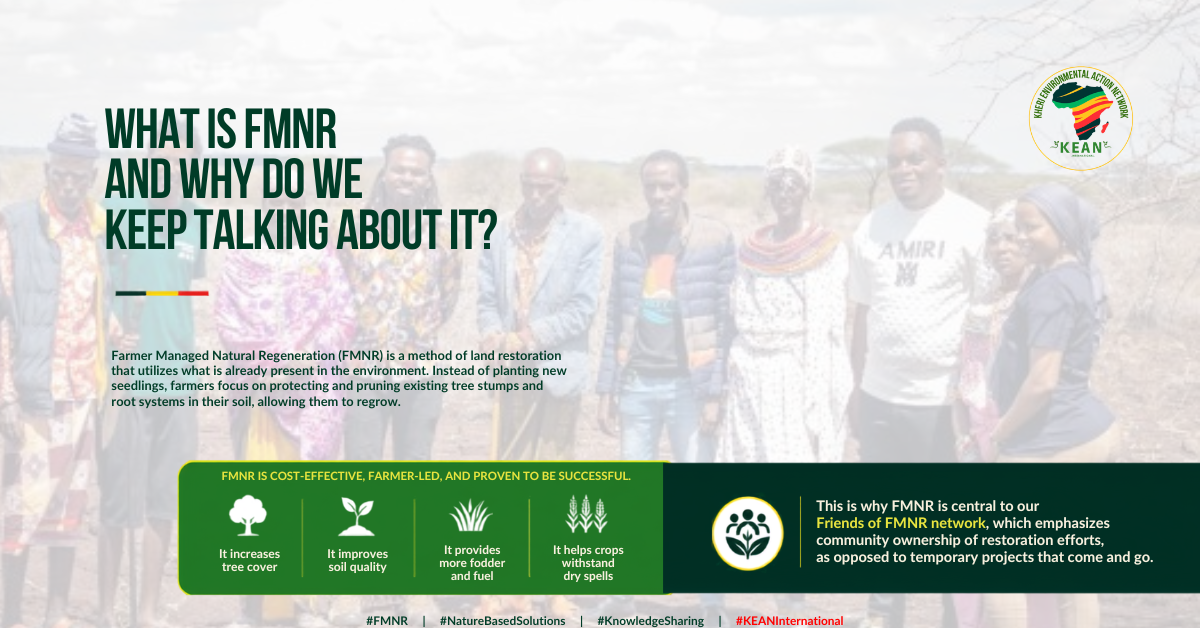
Farmer Managed Natural Regeneration (FMNR) is recognized as one of the most effective methods for land restoration among African smallholders, yet it remains largely misunderstood outside the communities that practice it. This approach deviates from the conventional perception that restoration begins with planting new trees.
The Conventional Restoration Process
Typically, the restoration process involves raising seedlings in nurseries, which are then transported, planted, and nurtured. This method, while visually appealing and widely promoted, can be expensive, and in arid regions, survival rates for planted seedlings can be low, raising questions about its effectiveness.
The FMNR Approach
In contrast, FMNR is rooted in the observation that many degraded agricultural lands still contain live roots and stumps, often cut back due to ongoing clearing, grazing, and burning practices. With proper protection and strategic pruning, these existing trees can regrow much more rapidly than seedlings planted from scratch. Farmers select the healthiest shoots from each stump, prune away the less vigorous ones, and manage the regrowth alongside their crops and livestock.
Farmer Management
Key to FMNR’s effectiveness is that it is farmer-managed. This method does not rely on external seedling supply chains, contractors, machinery, or irrigation systems. An informed farmer can initiate this process on their own land within a single season using tools they already possess. The knowledge of FMNR spreads organically, shared person-to-person, and therefore can proceed without significant financial backing.
Compounded Benefits of FMNR
The benefits of FMNR compound over time. Returning tree cover assists in shading the soil, which leads to reduced evaporation and lower surface temperatures. The accumulation of leaf litter enhances organic matter in the soil, allowing it to retain water for longer periods, thereby supporting crops through short dry spells. Some tree species contribute to soil fertility by fixing nitrogen, reducing the need for purchased fertilizers. Moreover, the method provides fodder for livestock and enables sustainable harvesting of fuel wood. Additionally, the presence of trees can act as windbreaks, mitigating crop damage and soil erosion, while also attracting birds and pollinators that boost fruit production.
Constraints of FMNR
While FMNR offers remarkable benefits, it has certain constraints. It is most effective in areas where living root stock remains, making it unsuitable for completely cleared or urbanized lands. Successful implementation also requires collective agreements on grazing practices to protect new growth, secure land tenure to incentivize investment, and an understanding that initial efforts may yield delayed results during the first few seasons.
Social and Institutional Challenges
The challenges associated with FMNR tend to be social and institutional rather than purely technical. This awareness shapes the structure of initiatives like the Friends of FMNR network, which enables farmers to share knowledge, negotiate grazing terms collectively, and gain recognition as active land managers in their communities rather than mere beneficiaries. Additionally, the Tech4NbS program maps areas of regeneration to provide evidence of progress, allowing communities to showcase their achievements to funders and local authorities.
The Lasting Impact of FMNR
The foundation of FMNR rests on the principle that the most effective restoration methods are those that communities already understand, fully own, and can sustain independently. While external funding projects may have a limited timeframe, a farmer who has witnessed their own land’s recovery and has empowered others to do the same is likely to continue these practices beyond the duration of funding cycles.
Conclusion
In summary, while some may argue that land restoration in Africa is a complex and costly endeavor, FMNR demonstrates that it can be an accessible, patient, and technically modest solution, rooted in mutual trust among community members. This approach emphasizes the possibilities for sustainable land management through local knowledge and cooperation.