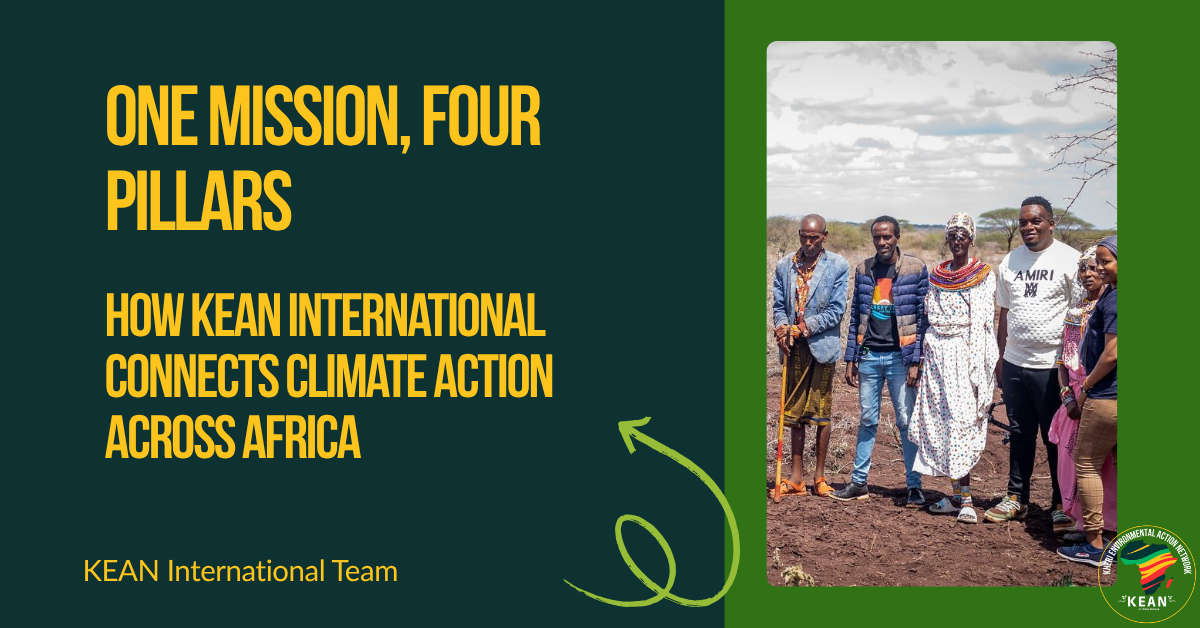

At KEAN International (Kheri Environmental Action Network), our commitment is clear: we are dedicated to connecting climate and environmental actions across Africa and the globe. Each week, we reaffirm this mission because it remains vital. Our objective is not to supplant the commendable work communities are already undertaking; instead, we aim to bridge grassroots organizers with global platforms, unite young leaders with policy discussions, and align local knowledge with the resources necessary for meaningful impact.
This mission is supported by a robust foundation built on four essential pillars: Youth Action, Knowledge Sharing, Policy Influence, and Capacity Building. These are not mere buzzwords on a strategic plan; they are the framework that guides every program, partnership, and campaign we implement. Let’s explore each pillar and its real-world application.
Youth Action: Empowering Young Leaders
Across Africa, young people are leading the climate response with unwavering determination. They are not waiting for permission or a seat at someone else’s table. Youth Action represents our pledge to harness this energy by providing the infrastructure they need: projects, education, and mentorship that enable young leaders to craft solutions rather than merely participate in discussions about them.
A shining example of this commitment is the Africa Youth Caravan, a dynamic initiative that brings together young climate advocates from diverse regions. This continent-spanning program fosters skill development, strategy sharing, and cross-border connections among youth, creating a network of solidarity and support. Imagine a young organizer addressing reforestation in Kikuyu collaborating with another focused on ocean plastics in coastal Kenya. Through the Caravan, they come together, compare notes, and emerge better equipped to tackle the multifaceted challenges of climate change.
We recognize that those who will bear the brunt of climate decisions are often not the ones making them. Our mission is to close that gap and elevate youth voices in the climate discourse.
Knowledge Sharing: Facilitating Free Flow of Information
Great solutions can transform entire communities, but they must be accessible and scalable. This is where Knowledge Sharing plays a critical role. Our aim is to create the connective tissue that allows ideas, data, and invaluable lessons to flow freely among those who need them, enhancing collective efforts.
We host climate forums that facilitate direct dialogues between smallholder farmers and policy researchers, allow waste-picker cooperatives to exchange composting techniques, and enable activists from different cities to learn from each other’s experiences without the need for travel. While these interactions may not sound glamorous, they are often the critical difference between a localized good idea and a nationwide movement.
In our view, knowledge is a vital form of infrastructure; if information is stagnant, progress cannot flourish.
Policy Influence: Advocating for Change
While grassroots action is essential for driving change on the ground, policy shapes what can and cannot be accomplished. Our Policy Influence pillar ensures that African voices—especially youth perspectives—are actively included in the formulation of environmental policy rather than being informed post-factum.
This work is evident in our engagement with the UNFCCC’s Conference of the Parties (COP), where young African advocates have historically faced challenges in being heard amid government and institutional dominance. Closer to home, we focus on advocacy, research, and partnerships designed to embed climate and environmental priorities into local and national policies, ensuring they are more than just aspirational statements in unused strategy documents.
While policy work may lack the immediate gratification of hands-on initiatives like tree planting or clean-up drives, it is essential for safeguarding the progress made on the ground from future decisions made without stakeholder input.
Capacity Building: Equipping for the Future
None of our efforts would be sustainable without a focus on Capacity Building. This pillar empowers individuals and organizations not just through one-off training sessions but by providing the tools and skills necessary to tackle environmental challenges well into the future.
Our initiative, Bustani Gardens, exemplifies this ethos. “Bustani,” the Swahili word for garden, symbolizes our commitment to hands-on, practical work that cultivates real skills in sustainable agriculture and land stewardship—skills that remain within the community even after our support transitions. Alongside Bustani Gardens, we implement projects like Farmer-Managed Natural Regeneration (FMNR) pilots, which educate communities in restoring degraded land using techniques they can share with their neighbors.
Capacity Building asks a crucial question: What happens after the workshop ends and the funding cycle closes? We are determined to ensure that the knowledge and skills imparted have lasting effects.
Conclusion
Through our mission of connecting climate action across Africa, KEAN International is dedicated to fostering youth engagement, facilitating knowledge exchange, influencing policy, and building community capacity. By grounding our efforts in these four pillars, we aspire to create a sustainable and impactful movement that empowers local communities and amplifies their voices on the global stage. Together, we can shape a brighter, more equitable future for our planet.