

60t
60%
58 - 65 C
6L
Organic waste collected from local markets
Reduction in waste volume through composting
Target temperature to kill pathogens & weed seeds
Water held per kg of finished humus compost


The Method
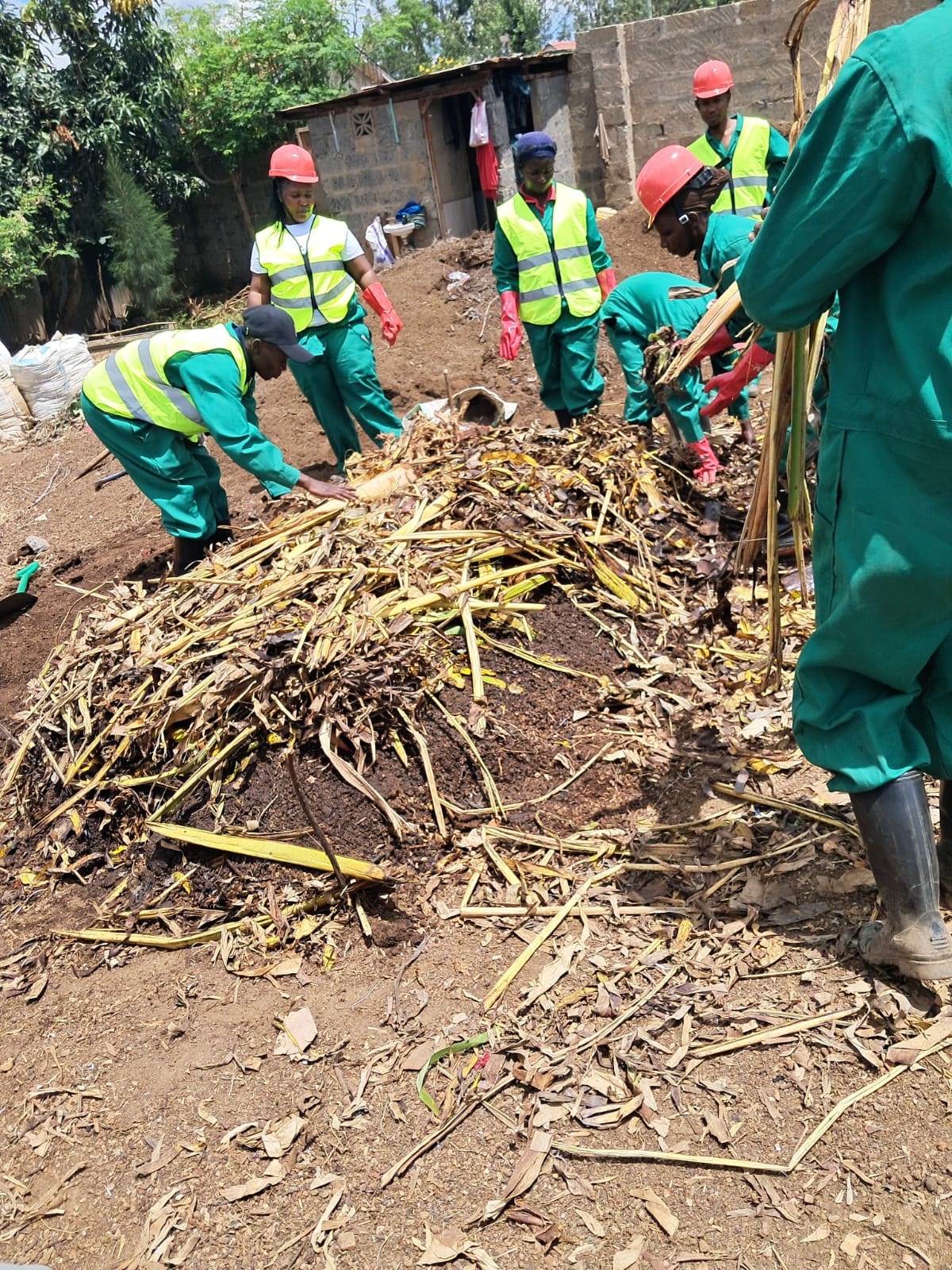
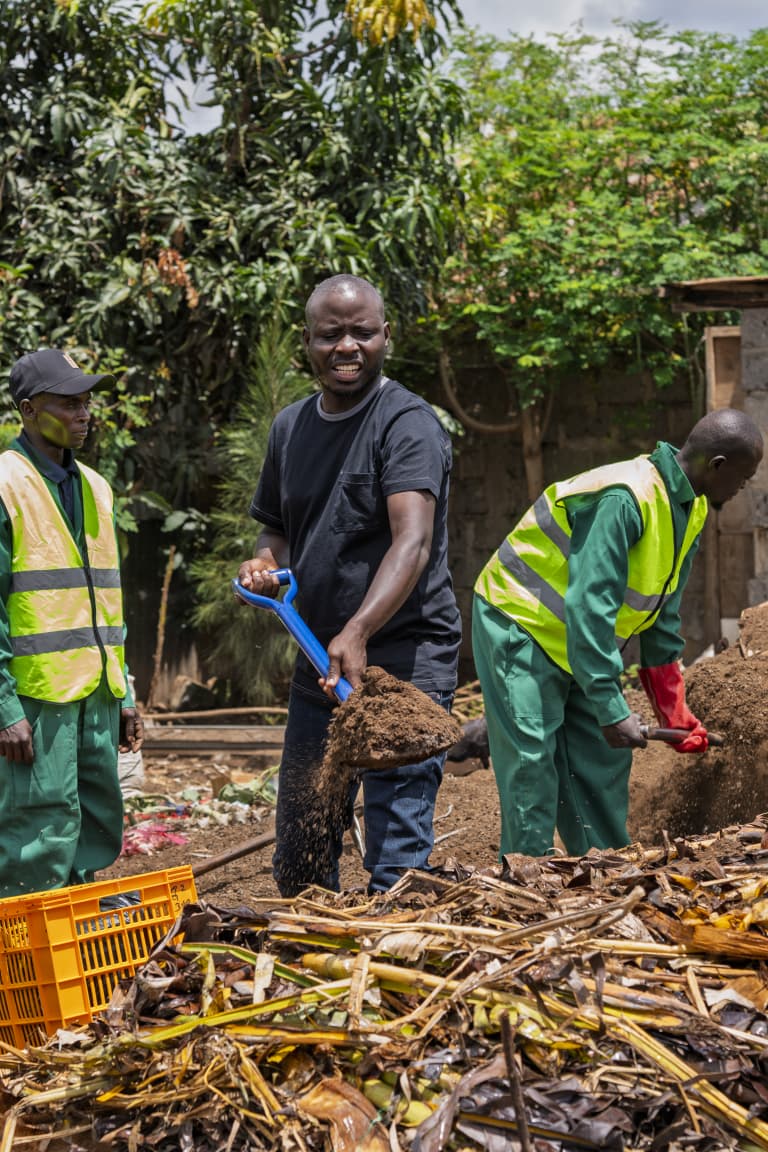
How we built the compost heap
Each heap begins with a 30cm pit, topsoil set aside to preserve its microorganisms for later. Then comes the layering — a precise balance of carbon, nitrogen, air, and moisture, repeated at least 5 times to reach effective height.
Layer 1
Straws & twigs
Creates air pockets for oxygen flow that microorganisms need to survive
Layer 2
Dry leaves
Provides carbon, the primary energy source for decomposition
Layer 3
Manure
Rich in nitrogen, it activates microbial breakdown and adds nutrients
Layer 4
Eggshells
Adds calcium and minerals that enrich the final compost
Layer 5
Kitchen & green waste
Supplies nitrogen and moisture, accelerating decomposition
Layer 6
Wood ash
Provides potassium and helps neutralize soil pH for better yields
Each completed "course" is moistened with approximately 60 litres of water to activate microbial activity, then covered with topsoil and dry materials to retain moisture and prevent nutrient loss. The heap is turned every 21 days — three times total — to introduce oxygen and ensure even decomposition.


Why It Matters
Compost is not fertilizer — it's a soil transformer
Finished compost does far more than feed crops. It rebuilds the very structure of degraded soils, making it one of the most powerful tools for climate resilience and food security available to smallholder farmers in Kenya.
✔️Binds sandy soils and loosens compacted clay soils
✔️Supplies nutrients slowly for sustained crop growth
✔️Neutralizes soil acidity for better, more reliable yields
✔️Cuts farmer dependence on expensive synthetic fertilizers
✔️Retains up to 6 litres of water per kilogram of humus
✔️Reduces pests and diseases through high-temperature decomposition
✔️Reduces waste volume by up to 60%, creating green jobs
✔️Closes the nutrient loop between urban markets and rural farms
This is circular economy made practical — organic waste from Ruiru's markets becoming the fertility that grows the next harvest. It is soil restoration. It is community empowerment. It is the Just Transition, starting from waste.

What Comes Next
One demonstration. A growing commitment.
Participants left the demonstration with more than skills. Farmers and waste workers pledged to start their own compost heaps, share knowledge within their communities, and promote sustainable farming practices in Kiambu County and beyond.The Organic Rebirth Project is now expanding — training more waste workers as composting specialists, connecting them to farmers, and building decentralized composting infrastructure that can serve entire sub-counties. The goal: make composting the default in Kiambu County's waste and agriculture system.
Support the Work
Help us scale what's working
The Organic Rebirth Project is building a model for community-led composting that can transform waste management across Kenya. Your support expands training, equips more waste workers, and brings living soil to more farms.