

How Kamangu High School Students Are Leading Composting in Kikuyu
There is a particular kind of hope that shows up when young people stop waiting to be told what to do and simply start doing it.
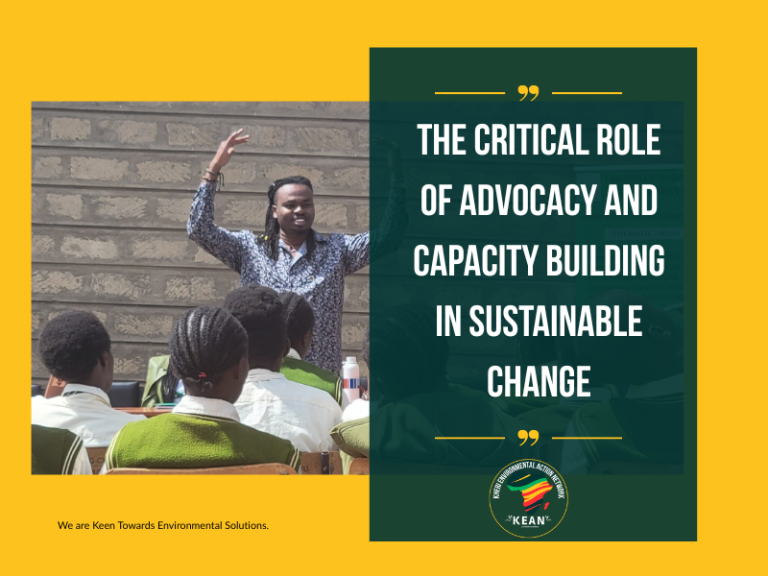
That hope was very much alive at Kamangu High School in Kikuyu this week, as the Organic Rebirth Project established its second composting hub. Students, teachers and Kikuyu waste pickers gathered around a stretch of open ground, and what happened next was worth documenting carefully.
The students took the lead
Without being prompted, they began explaining the composting process to everyone around them; not reciting facts, but demonstrating understanding. Layer by layer, they walked through the reasoning: why twigs go at the bottom for aeration, why dry grass provides carbon, why animal waste accelerates decomposition through nitrogen, why eggshells enrich the pile with calcium, why ash regulates pH, why water is sprinkled after each layer, and why a thermometer stick tells you whether microbial activity is working inside the heap.
This was proof that when young people are genuinely equipped with knowledge, they become environmental problem-solvers.
A Classroom That Wasn’t a Classroom
What made the Kikuyu session particularly striking was how the composting activity blurred the line between science lesson, climate education and leadership development; all at once.
Students dug and preserved topsoil rich in microorganisms. They layered dry and green materials to achieve the right carbon-nitrogen balance. They took turns, asked questions, and explained the process to one another. A compost heap is alive. It needs air, moisture and food. When properly managed, it transforms what communities throw away into nutrient-rich humus that restores soil health.
By the end of the session, students had made a collective pledge to keep composting at school and at home, turning organic waste into fertilizer for kitchen gardens. We are holding them to it and we expect they will hold themselves to it.
No Experts and Others, Just Everyone
One of the most powerful moments of the day was harder to photograph but impossible to miss: the way students, teachers, and waste pickers moved in and out of different roles throughout the session.
There were no “experts” on one side and “learners” on the other. Everyone participated, everyone taught, and everyone learned. As the compost layers went up, waste pickers drew on their practical experience with waste handling and material selection, while students explained the science behind each choice. That exchange did more than build a compost heap.
It helped break stigma.
Waste pickers are essential environmental stewards in our communities. Their role in waste recovery and recycling is critical and frequently invisible. By working side by side with students and teachers, something shifted. The young people who will shape future policy, future businesses, and future communities left Kamangu with a direct, embodied appreciation of the role waste pickers play every single day in protecting the environment we share.
Dignity grows where collaboration exists.
The Climate Argument We Sometimes Forget to Make
It is easy to frame composting as a practical waste management activity and it is. But the Kikuyu session was also an opportunity to connect students directly to the climate stakes.
Every layer of the compost heap represented a measurable intervention: organic waste diverted from dumpsites, nutrients returned to the soil, improved water retention for local farms, reduced dependence on synthetic fertilizers, and lower methane emissions from decomposing organic matter that would otherwise rot anaerobically. Young people are among the most affected by climate change, yet they are routinely excluded from designing solutions. At Kamangu High School, that exclusion was reversed at least for a day, and hopefully for much longer.
Climate action is no longer abstract for these students. It is happening in schools, homes, gardens, and communities, one compost layer at a time.
What This Hub Means for the Project
The establishment of our second composting hub in Kikuyu is a milestone in the Organic Rebirth Project’s growth across Kiambu County. It reflects a model that is proving replicable: bring together community waste pickers, young learners, and agricultural knowledge; give people practical tools and real responsibility; and watch what grows.
The students at Kamangu now understand that a significant portion of household and school waste is organic and, rather than filling a dumpsite, it can become fertilizer for food production. That understanding; practical, grounded, and owned by the community itself, is the foundation the project is built on.
Waste is no longer waste. It is part of the solution.